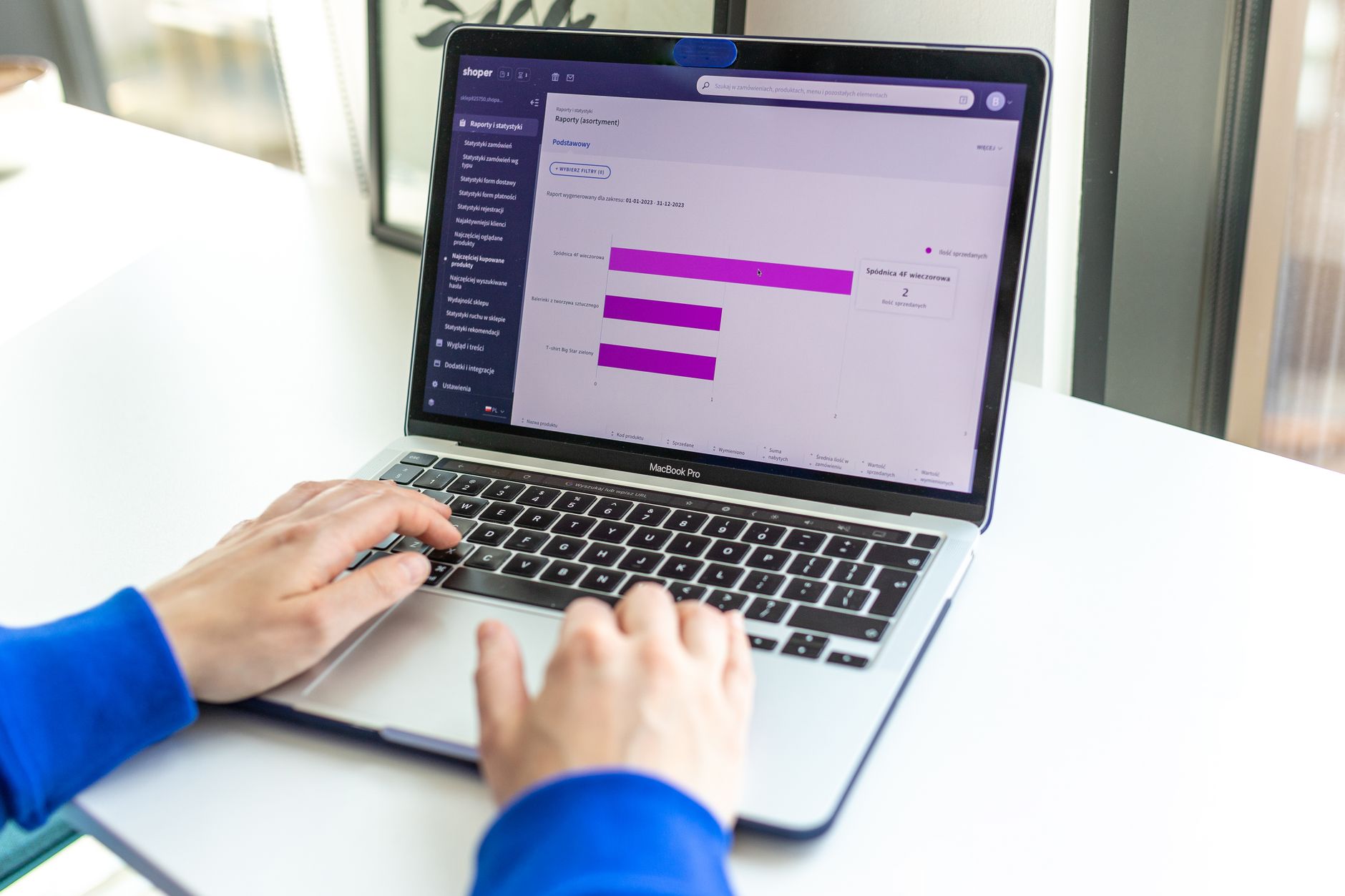
I remember sitting across from a friend who had poured her entire heart—and her 401(k)—into a beautiful line of botanical supplements. She was beaming as she showed me her Shopify store, a digital space that felt like a warm hug. Then, she clicked a button to launch her first ad campaign. Two hours later, the red text appeared: Account Disabled. Policy Violation.
\n \nThe light just went out of her eyes. It wasn't just about the money; it was the feeling of being told her work didn't belong in the town square. If you’ve ever felt that pit in your stomach—that sense that the gatekeepers of the internet have decided your product is \"too risky\" or \"too regulated\" to even show up—I want you to take a deep breath. We are going to talk about the bravery of being found when the traditional doors are locked and bolted.
\n\nIn 2026, the digital world has only gotten more protective. But here is the truth we often miss: when ads say no, organic search says, \"Tell me more.\" SEO for regulated industries isn’t just a technical necessity; it’s our way of showing up for the people who are out there searching for us in the dark. It’s about building a bridge of trust when others are building walls.
\n\nThe Arena of Restricted Products: Why Organic is Our Superpower
\nWe live in an era where algorithms are the new moral compasses of big tech. Whether you are selling wellness tinctures, specialty spirits, or complex medical equipment, you are operating in what we call a \"restricted niche.\" For most, this feels like a handicap. But I want us to look at it differently.
\n \nWhen you can’t buy your way to the top of the page, you have to earn your way there. This is a good thing. It forces us to be more human, more helpful, and more honest than the generic brands who can just throw money at a problem. Organic growth tactics are the only way to build a sustainable business when the ad platforms are fickle. We aren't just chasing clicks; we are cultivating a community that finds us because we solved their problem, not because we interrupted their scroll.
\n\n \n
\n The Bravery Takeaway: Rejection from an ad platform is not a reflection of your worth. It is an invitation to build a deeper, more resilient connection with your audience through content that actually matters.\n\n\n
Trust is the Only Currency: Mastering E-E-A-T
\nIf we want to rank where ads can’t, we have to talk about trust. Google uses a framework called E-E-A-T: Experience, Expertise, Authoritativeness, and Trustworthiness. For those of us in regulated industries, this isn't just a checklist. It's our heartbeat.
\n\nGoogle’s 2026 algorithms are incredibly sensitive to \"Your Money Your Life\" (YMYL) topics. If your product affects someone’s health, safety, or financial stability, the bar is higher. You can't just say your product works; you have to show the work. This means citing sources, featuring expert reviewers, and being radically transparent about what your products can and cannot do.
\n\nOne of the biggest mistakes we make is trying to sound like a faceless corporation to seem \"professional.\" Please, don't do that. Your expertise comes from your passion. Share your certifications, but also share your story. Why did you start this? What keeps you up at night? When we hide our humanity, we actually decrease our trustworthiness. People trust people, not polished logos.
\n\nRelated reading: The 2026 Shopify Guide to Series Blogging: Building Topical Authority
\n\nEducation Over Transaction: The Art of the \"How\" and \"Why\"
\nHere is a contrarian take that might feel a bit uncomfortable: Stop trying to rank for \"Buy [Your Product Name]\" as your primary goal. In a regulated space, those keywords are often heavily scrutinized or dominated by massive conglomerates. Instead, I want us to own the questions that lead people to the product.
\n\nIf you sell high-end air purification systems for industrial use, don't just write about the filters. Write about the fear a small business owner feels when they read a new safety regulation. Write about the science of clean air in a way that makes a manager feel empowered to protect their team.
\n\nBy answering the \"how\" and the \"why,\" you become the authority before the customer even reaches for their wallet. You are providing value before you ever ask for a sale. This is how we win in regulated industry SEO. We become the most helpful person in the room. When we lead with education, we bypass the \"salesy\" filters that search engines and humans both use to tune out noise.
\n\n \n
\n The Connection Takeaway: True authority isn't about shouting your credentials; it's about making your customer feel smarter and more capable after reading your content.\n\n\n
Specific Organic Growth Tactics for 2026
\nLet's get into the weeds together. How do we actually do this on Shopify? It’s not about magic; it’s about consistent, intentional action.
\n\n- \n
- The Power of the Long-Tail: Instead of fighting for \"CBD oil,\" we should be writing for \"how to use CBD oil for sleep-deprived parents in Denver.\" The more specific we get, the less competition we face and the more seen our specific audience feels. \n
- Content Rituals: People in regulated industries often have high-anxiety problems. Use your blog to create rituals around your product. If you're selling specialty teas for focus, don't just sell the tea; sell the 10-minute morning ritual. Check out this guide on ritual-led content for more on this. \n
- Zero-Party Data Collection: Since we can't always retarget people with ads, our blog content needs to encourage people to raise their hands. Use quizzes or helpful downloads to get them onto your email list. This is about building a relationship that no algorithm can take away. \n
- Technical Transparency: Ensure your Shopify store has a clear About Us page, a robust Contact page, and clear links to your privacy policy. Google needs to see that there are real humans behind the screen. You can learn more about Google's guidelines on Creating Helpful, Reliable, People-First Content. \n
I know this feels like a lot of work. And honestly, it is. Writing these posts, researching the keywords, and making sure everything is compliant takes time that most store owners just don't have. We are busy trying to get orders out the door and manage supply chains. But if we don't do it, we stay invisible. And being invisible when you have something that can help people... well, that's the real heartbreak.
\n\nOwning the Narrative: A Case Study in Courage
\nThink about the brands that have thrived in spite of restrictions. They didn't do it by being \"sneaky\" with their Shopify SEO. They did it by being the loudest voice for their community. I worked with a founder once who sold high-end home safety equipment—products that are often flagged as \"weapons\" by poorly trained AI bots.
\n\nInstead of fighting the bots, he started writing for moms who lived alone. He wrote about the psychology of safety. He wrote about how to talk to kids about emergencies. He didn't focus on the \"product,\" he focused on the \"person.\" His organic traffic tripled in six months. Why? Because he stopped trying to outsmart the system and started trying to out-love the competition.
\n\nRelated reading: Shopify’s Guide to SEO for Beginners
\n\nThe Vulnerability of Automation
\nI want to say something that might sound a bit radical. Sometimes, the most courageous thing you can do is ask for help. We often think that for content to be \"authentic,\" we have to suffer through every word of it ourselves at 2:00 AM while the kids are finally asleep.
\n\nBut authenticity isn't about who typed the letters; it's about the heart behind the strategy. Using a tool to help you express your expertise isn't cheating—it's stewardship. It's making sure your message actually gets out there instead of staying buried in your \"I'll do this next week\" pile. We have to be willing to use the tools available to us so we can stay in the arena for the long haul.
\n\n\n The Small Win Takeaway: You don't have to be a professional writer to have a professional-grade blog. You just have to be a person who cares enough to make sure the information is available.\n\n\n
FAQ: Navigating the Restricted SEO Waters
\n\nCan I mention my restricted product by name in my blog posts?
\nYes, absolutely. In fact, you should. While ad platforms might ban the mention of certain terms, search engines are looking for context. As long as you are providing helpful, non-deceptive information that follows legal guidelines for your industry, naming your products is essential for restricted products marketing.
\n\nHow do I handle medical or legal disclaimers without scaring people away?
\nBe human about it! Instead of a cold, terrifying block of legalese, try something like: \"We care about you, so please remember that we are creators, not doctors. Always talk to a professional before changing your routine.\" This satisfies the need for disclaimers while maintaining that warm connection you've built.
\n\nHow long does it take for organic SEO to work in a regulated industry?
\nI wish I could tell you it’s overnight, but that wouldn't be the truth. Usually, it takes 3 to 6 months to see significant movement. But here is the beautiful part: unlike an ad that stops working the second you stop paying, a good blog post is a gift that keeps on giving for years.
\n\nWhat if my industry regulations change?
\nThis is where being a Shopify store owner is actually a benefit. You have total control over your content. If a regulation changes, you can update your posts immediately. This actually builds more trust with your audience because they see you are staying on top of things for them.
\n\nShowing Up and Being Seen
\nI know the road of a regulated industry is paved with